
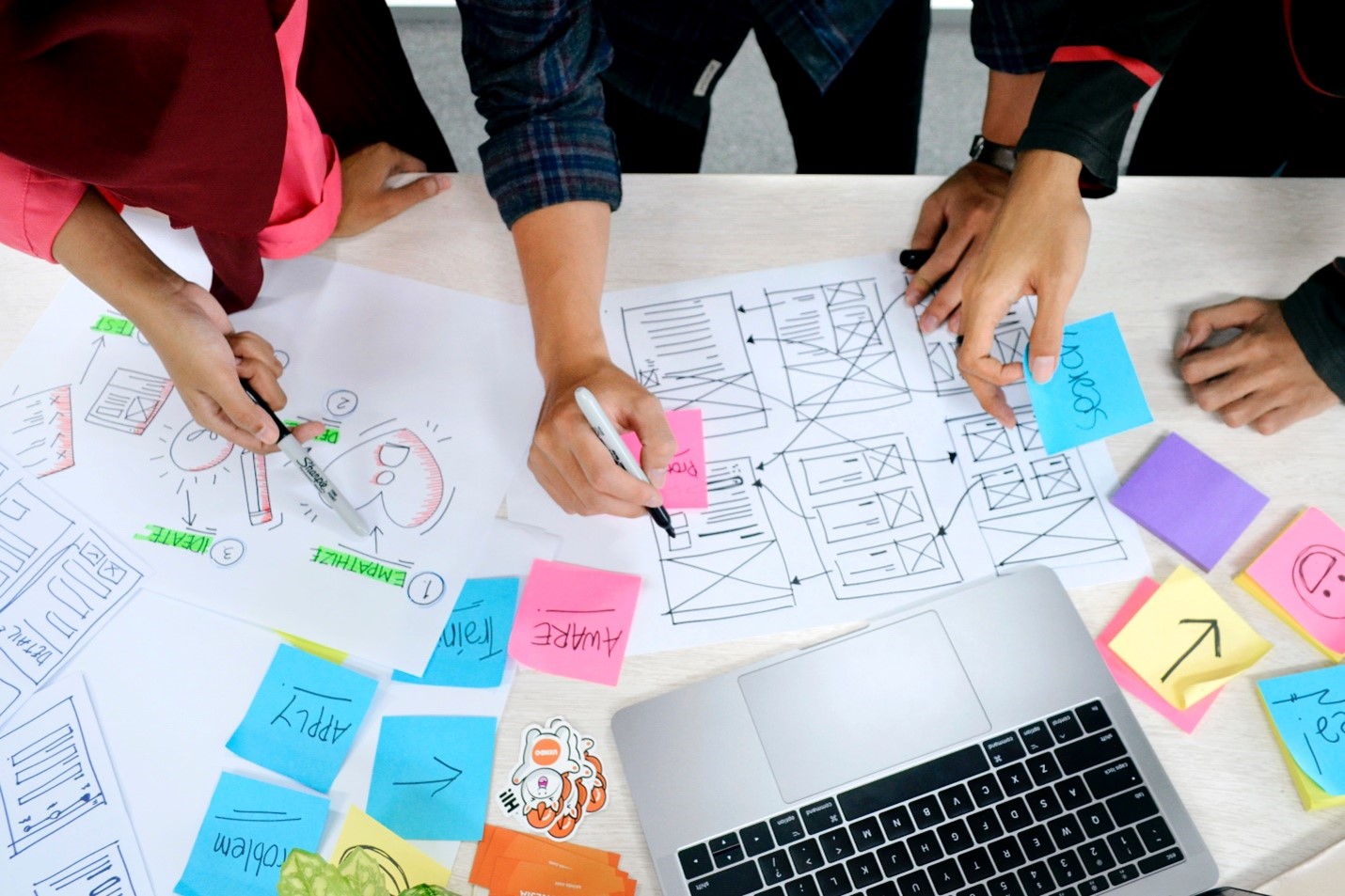
Design thinking applies an iterative process to understand the user, challenge beliefs, and look for fresh solutions to problems to identify options and solutions that might not be readily obvious. Design thinking is more of a solution-based strategy to solving problems. It is a mode of thinking and working as well as an assortment of practical methods.
Design thinking focuses on understanding the demographic for whom the products or services are designed. It enables designers to observe and develop an understanding and empathy for their target users. Design thinking revolves around three critical questions — questioning the problem, questioning norms and assumptions, and questioning the implications. Design thinking is a real-world approach to dealing with yet unknown issues. It looks from a human-centric angle. It adopts a hands-on approach to prototyping and testing. Design thinking also involves continuing experimentation and trying out new concepts and ideas.
The Phases of Design Thinking
There are many variants of the process of design thinking. But all its forms are very similar. Every variation of the design thinking process embodies the same principles. This article will focus on the 5-phase model laid down by the Hasso Plattner Institute of Design, the vanguard of applying and teaching Design Thinking. The 5 phases according to this school are the following: